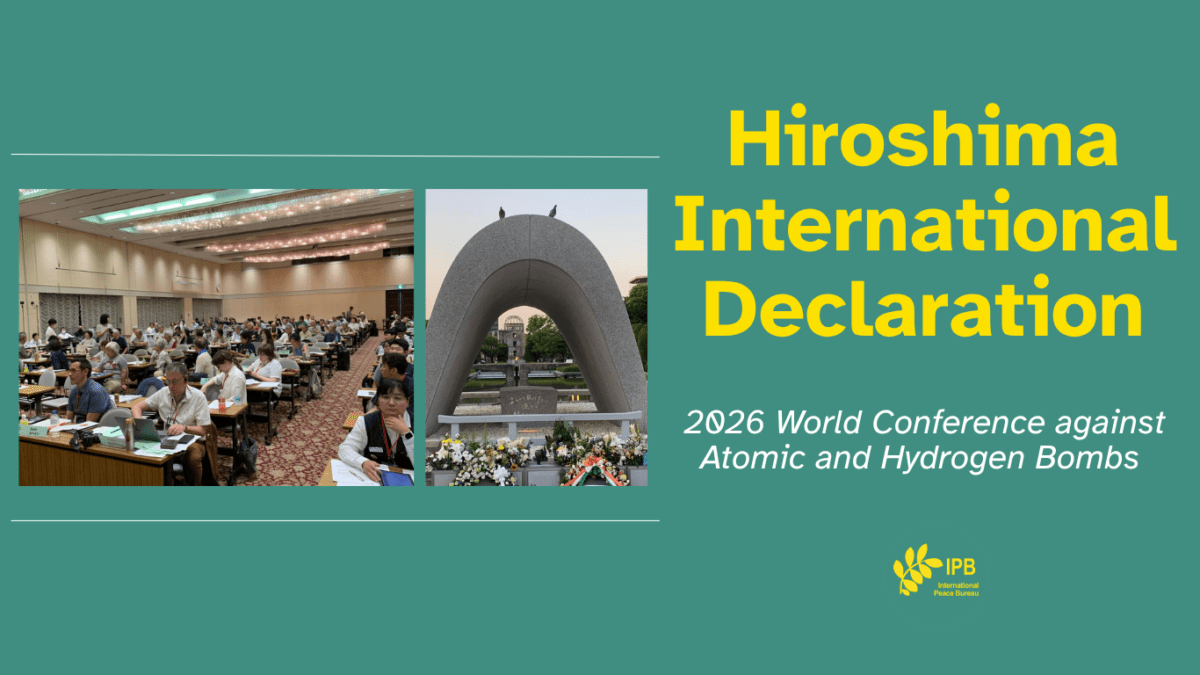
2026 World Conference against A and H Bombs
Declaration of International Meeting
The world now stands at a critical crossroads: between war and nuclear catastrophe on the one hand, and peace and the abolition of nuclear weapons on the other.
The use of force in violation of the Charter of the United Nations is absolutely unacceptable. The United States’ attack on Iran, Russia’s invasion of Ukraine, and Israel’s genocide in Gaza and military offensive to the West Bank must be brought to an immediate end. The nuclear-armed states, including the U.S., the United Kingdom, France, Russia and China, as well as their allies, such as NATO members and Japan, are further deepening their reliance on nuclear weapons, reigniting a nuclear arms race. Nuclear conflicts between India and Pakistan, as well as North Korea’s nuclear armament, are also serious issues. The use of force by nuclear-armed states and their allies increases the real danger of nuclear war.
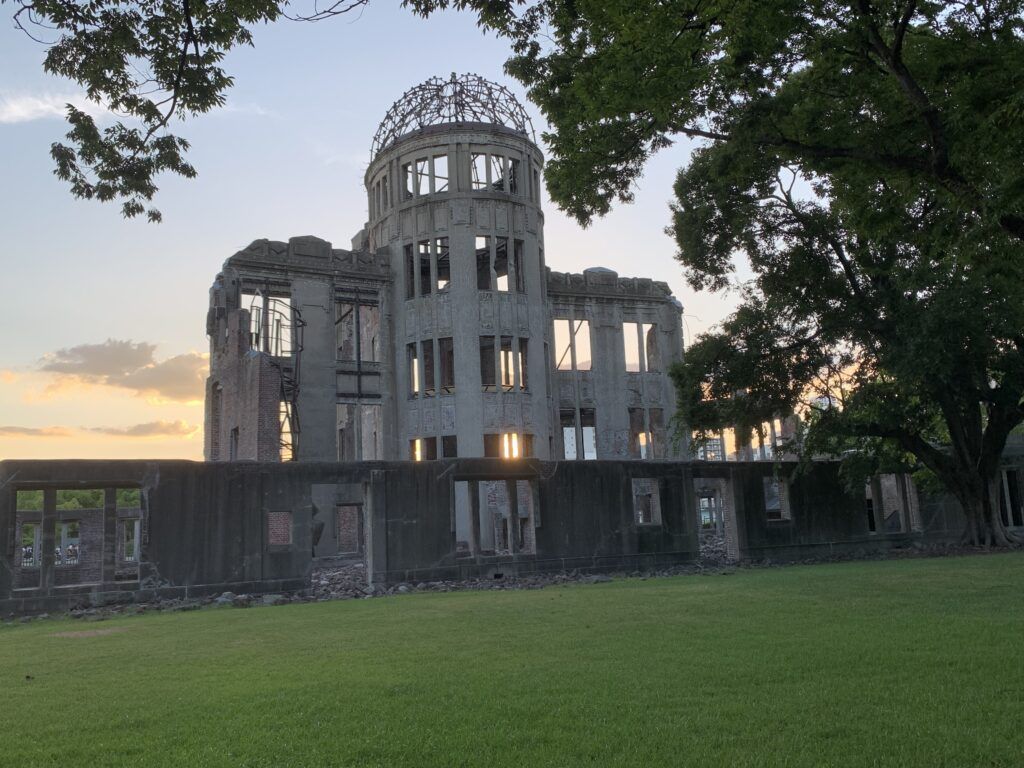
If nuclear weapons are used, they will bring about catastrophic and profoundly inhumane consequences. This is unmistakably clear from the testimonies of atomic bomb survivors (hibakusha) and victims of nuclear testing. The U.S. atomic bombing on Hiroshima and Nagasaki reduced two cities to ashes in an instant and claimed the lives of over 210,000 people by the end of 1945. The overwhelming majority of the victims were civilians, including women and children, including people from the Korean Peninsula, many of whom were
brought for forced labor. Those who survived the bombings endured severe long-term health effects as well as discrimination. The use of nuclear weapons can neither morally nor legally be justified under international humanitarian law.
Today, more than 12,000 nuclear warheads still exist on earth, with the U.S. and Russia possessing over 90 percent of them. It is widely recognized that even the use of a small fraction of these weapons could trigger global climatic disruption and place the very survival of humanity in jeopardy. Humanity now stands on the brink of nuclear catastrophe. The elimination of nuclear weapons is therefore an urgent imperative affecting the very future of humankind.
“Nuclear weapons and humanity cannot coexist.” We must listen to the appeal of the hibakusha sincerely and urgently act to save humanity from the threat of nuclear catastrophe. Once again, we call on the people of the world and on political leaders everywhere to join forces in realizing a peaceful and just world free of nuclear weapons.
The current backlash against the aspiration for a nuclear-free and peaceful world is grave, but it can be overcome. Peace cannot be achieved through military force or the threat of nuclear weapons. The inhumane realities of Iran, Ukraine, and Gaza demonstrate this clearly. At the same time, voices opposing war, calling for the defense of the UN Charter, and expressing solidarity with the victims of armed conflicts are spreading across the world. We believe this is the path to the future.
The Treaty on the Prohibition of Nuclear Weapons (TPNW) now has 75 States Parties, and with signatory states included, the total has reached 100. The Treaty continues to advance steadily as the mainstream of the international community. The driving force of the Treaty was the joint effort of governments and civil society. Developing this cooperation can open up the prospect of a world without nuclear weapons.
Though it failed to issue an outcome document, the 2026 Review Conference of NPT also showed that such progress is possible. Seventy percent of the States Parties called for the fulfillment of Article VI, which obliges nuclear weapon states to pursue negotiations on nuclear disarmament leading to the elimination of nuclear weapons. The tireless efforts of hibakusha, together with those of civil society, have helped propel this global momentum forward. The commitments already agreed upon at previous NPT Review Conferences, including the “unequivocal undertaking” to accomplish the total elimination of nuclear arsenals, must be implemented without delay.
In November 2026, the First Review Conference of States Parties to the TPNW will be convened. We have to make it an opportunity to take the global movement for the abolition of nuclear weapons a great leap forward. As members of civil society invited to participate in the Conference, we are committed to do our utmost to help achieve that goal.
It is becoming ever more evident that the greatest obstacle to achieving a world free of nuclear weapons is the continued adherence of both nuclear-armed states and nuclear-dependent states to the nuclear deterrence doctrine. So-called “nuclear deterrence” is predicated on the threat of repeating the devastation of Hiroshima and Nagasaki against other nations. It is a doctrine fundamentally incompatible with international humanitarian law that prohibits the indiscriminate and inhumane use of armed force. Moreover, should “deterrence” fail and nuclear weapons be used, the consequences would be catastrophic for every nation. Reliance on “nuclear deterrence” serves only to perpetuate the constant risk of humanity’s annihilation. To
overcome this danger, let us work together with governments around the world to build international public opinion that rejects the nuclear deterrence doctrine.
Along with international pressure, grassroots movements in nuclear-armed states and nuclear dependent states are vital. Testimony from hibakusha, including those of Nihon Hidankyo, a Nobel Peace Prize laureate, and nuclear test victims has created a strong impact in the U.S. and its allies, as driving force for the new development of the movement. Public opinion and actions in these nations are key to changing the policies clinging to nuclear weapons.
What is needed now is not confrontation and division through military blocs, but peacebuilding and security based on an inclusive peace framework that embraces all nations. We oppose NATO’s enlargement and the strengthening of its nuclear posture. We demand peace building in East Asia, including the South China Sea, through dialogue and diplomacy, opposing any attempts to reinforce military alliances.
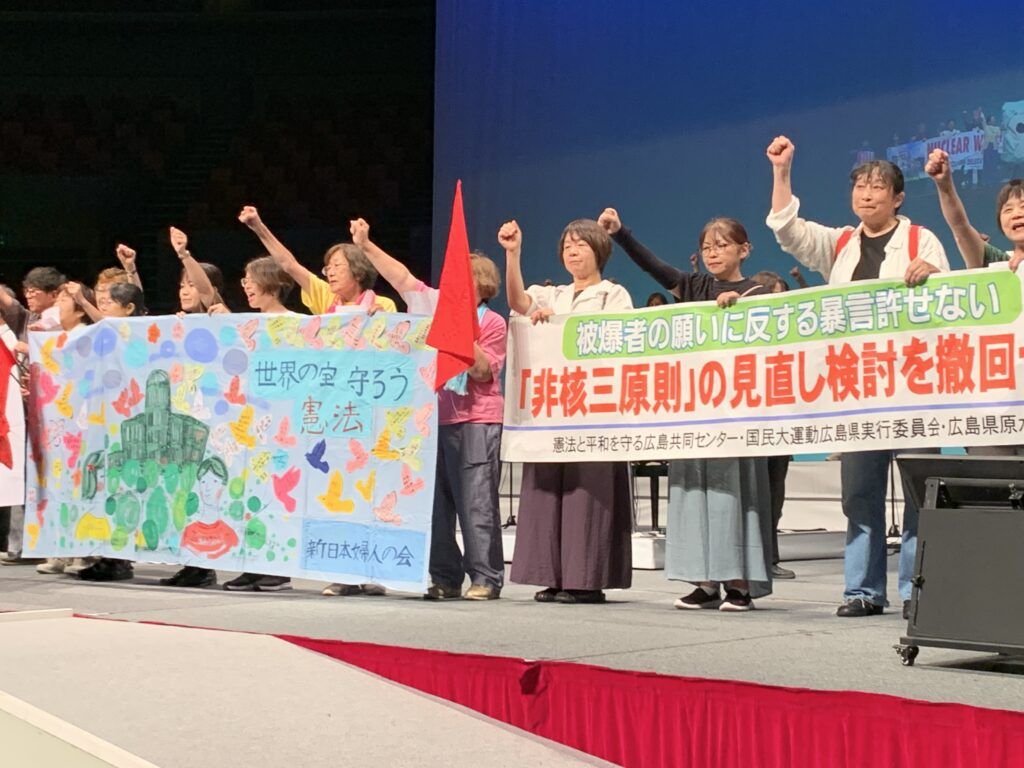
Despite being the only country to have suffered atomic bombings in war, the Japanese government is deepening its reliance on the U.S. “nuclear umbrella” and refusing to join the TPNW. It is even attempting to review the “Three Non-Nuclear Principles.” It is absolutely unforgivable for Japan to be complicit in the use of nuclear weapons.
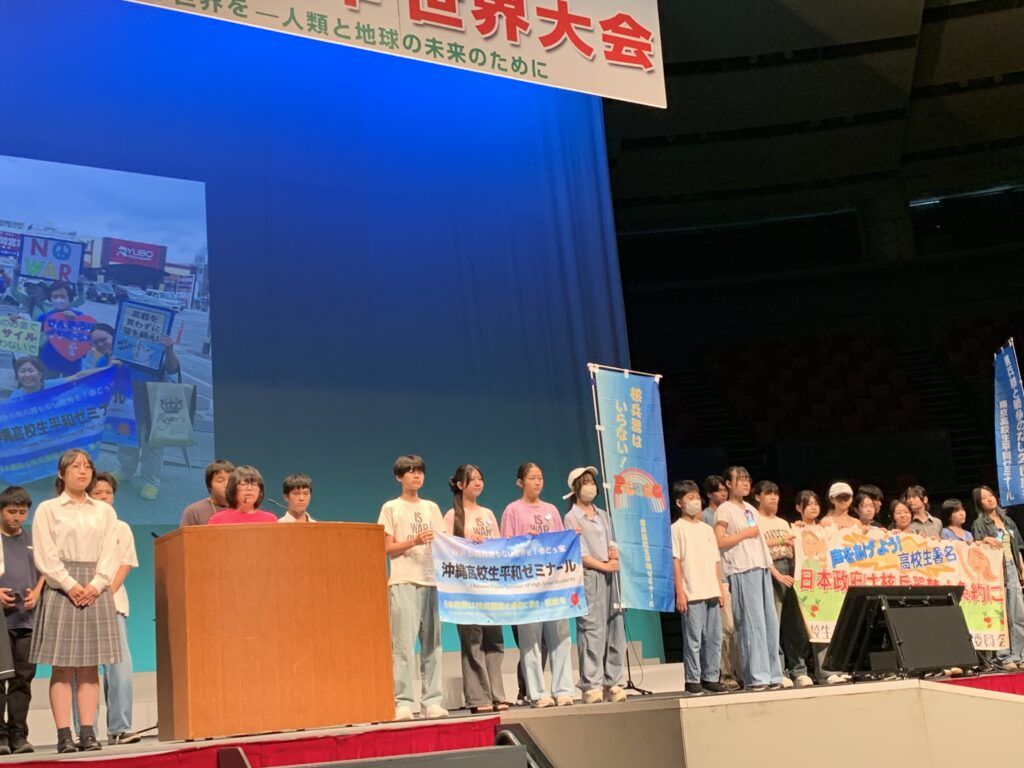
Under the Japanese government’s massive military expansion and war preparations, nationwide movements are gaining momentum, including those for anti-war peace, preventing the revision of the Constitution and protecting and demanding respect for Article 9, defending democracy and human rights, and safeguarding daily livelihoods. The struggle in Okinawa, where U.S. military bases are concentrated and is used as a stronghold for war, is one of the focal points. We express our solidarity with the movements in Japan.
Based on the UN Charter, we call for solidarity among global movements striving for “a nuclear weapon-free peaceful and just world,” as well as cooperation with national governments, the UN and international agencies.
— Let us develop our movement by focusing on raising awareness of the inhumane consequences from any use of nuclear weapons, including Hiroshima and Nagasaki atomic bombings and the nuclear tests. Let us promote activities to raise awareness about the A-bomb damage through international Hibakusha speaking tours and A-bomb photo exhibitions. Let us focus on the campaign to urge our own governments to join the TPNW and develop diverse actions for achieving the common goal of abolishing nuclear weapons. Let us hand over the real A-bomb damage and experiences to future generations.
―To advance victim assistance and environmental restoration, let us aim to realize measures based on the responsibility of the affected states and to establish international support.
—Towards the First Review Conference of the TPNW and the UN General Assembly, let us rally public opinion and actions for further cooperation with national governments and the UN.
―Let us demand the prohibition of the use or threat of use of nuclear weapons against non-nuclear-weapon states; the no-first-use of nuclear weapons; the creation, expansion, and strengthening of nuclear-weapon- free zones, such as a Middle East Nuclear-Weapon-Free Zone; the integrated pursuit of denuclearization and peace regime building on the Korean Peninsula; the entry into force of the Comprehensive Nuclear-Test-Ban Treaty; and a ban on the military use of AI, including in nuclear strategy.
―Let us promote solidarity with movements for anti-war and peace, the reduction of military spending and expansion of expenditures for living and livelihood, the removal of foreign military bases, opposition to the strengthening of military alliances, support for victims of war such as those affected by Agent Orange/dioxin, democracy, human rights, gender equality, zero nuclear power, and environmental protection including addressing the climate crisis.
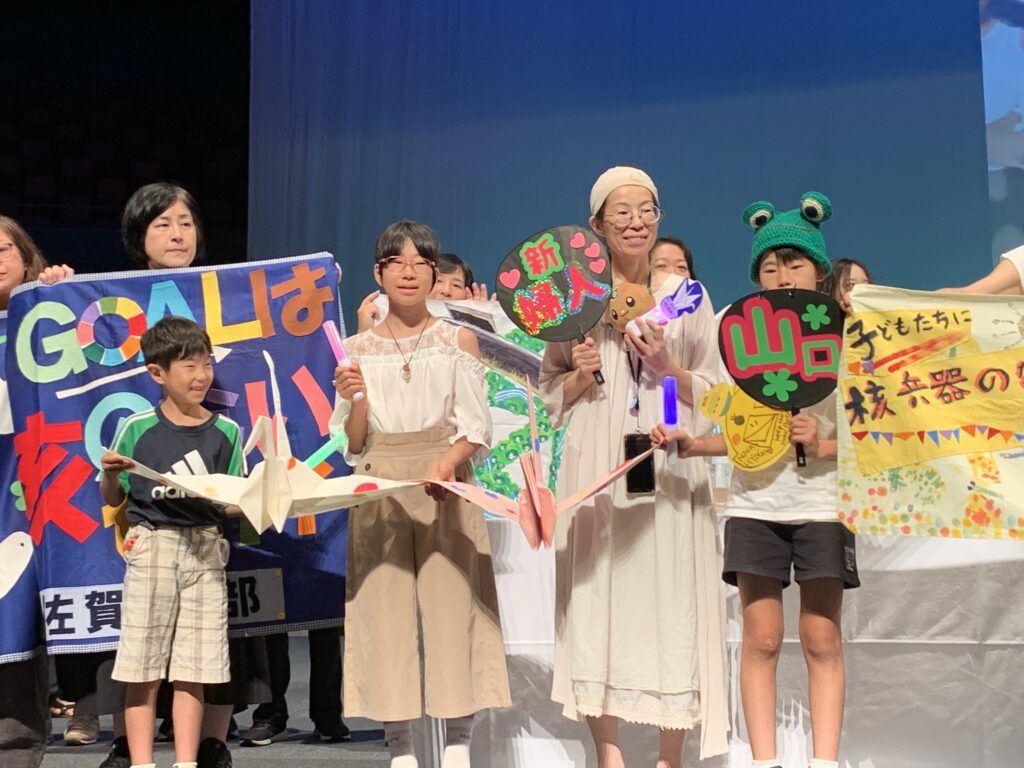
Let us incorporate a gender perspective into every aspect of these activities. Together with the younger generation and Hibakusha, let us forge a path of hope for the future.
August 4, 2026
International Meeting of 2026 World Conference against A and H Bombs
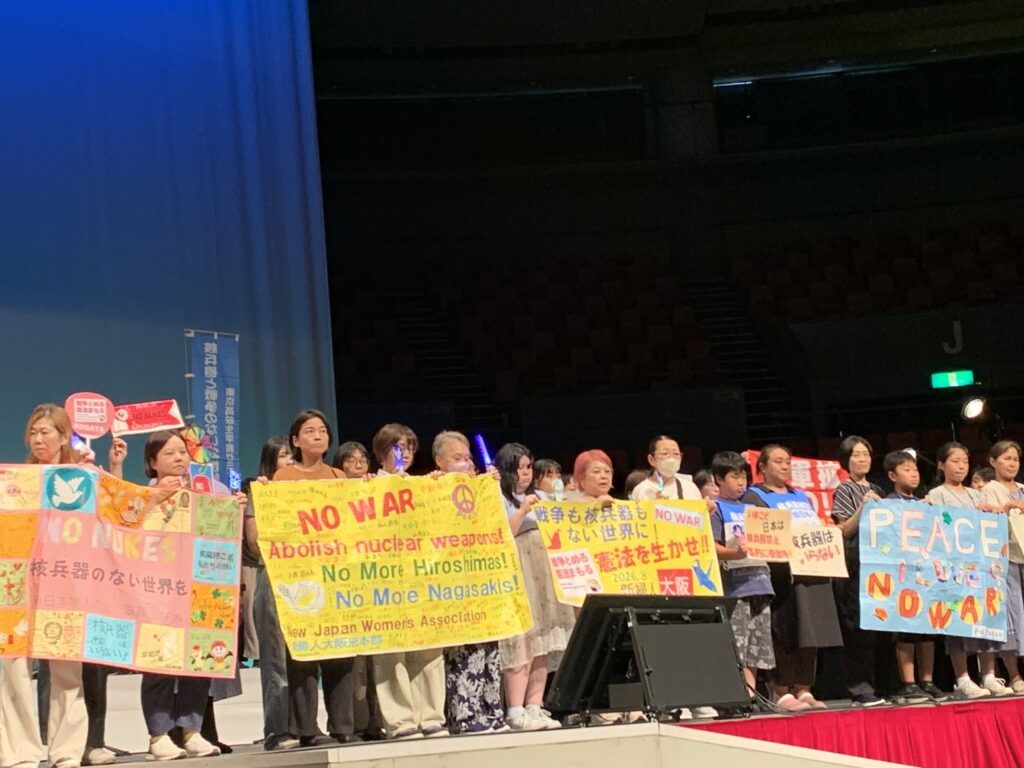
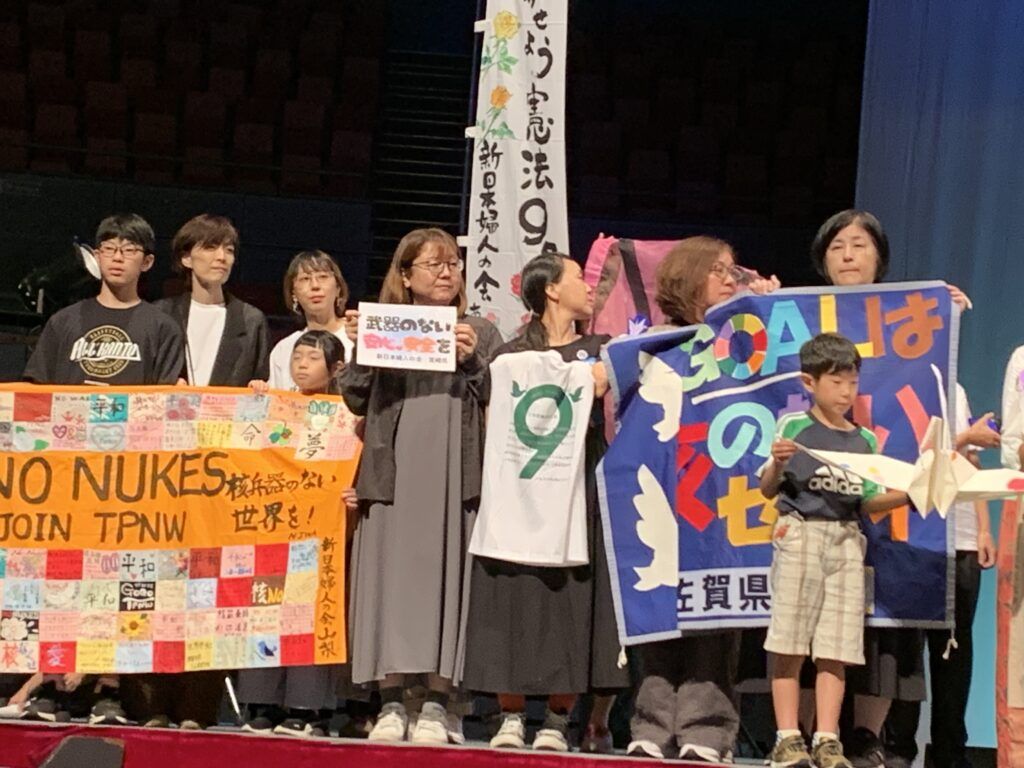
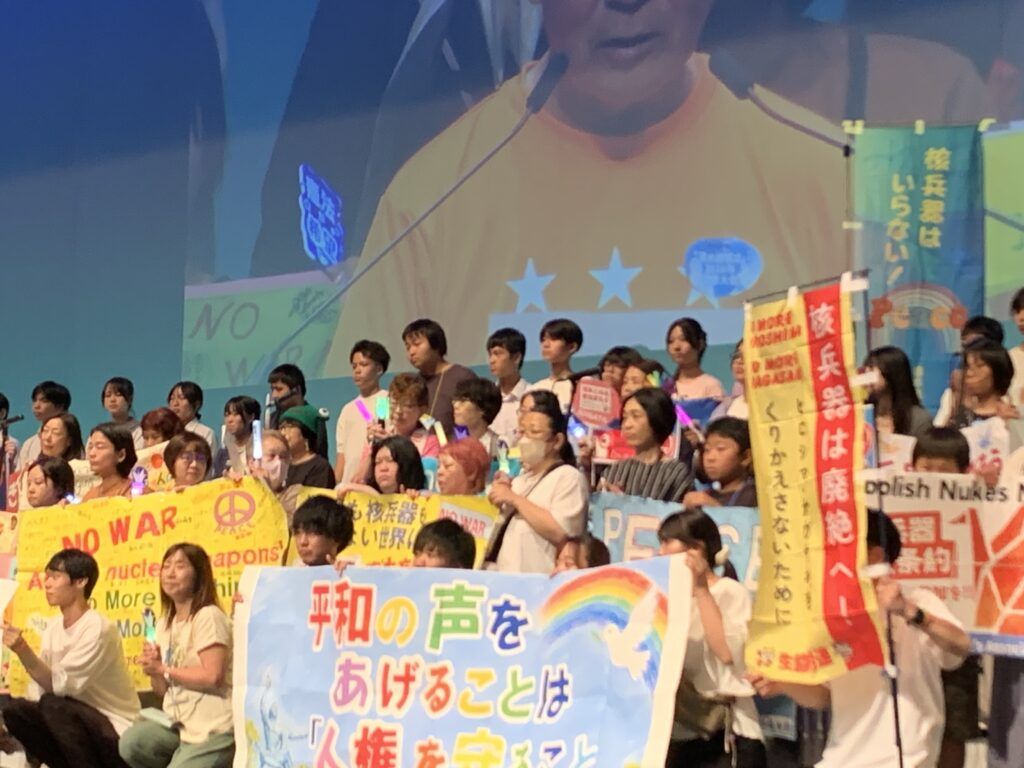
Photos
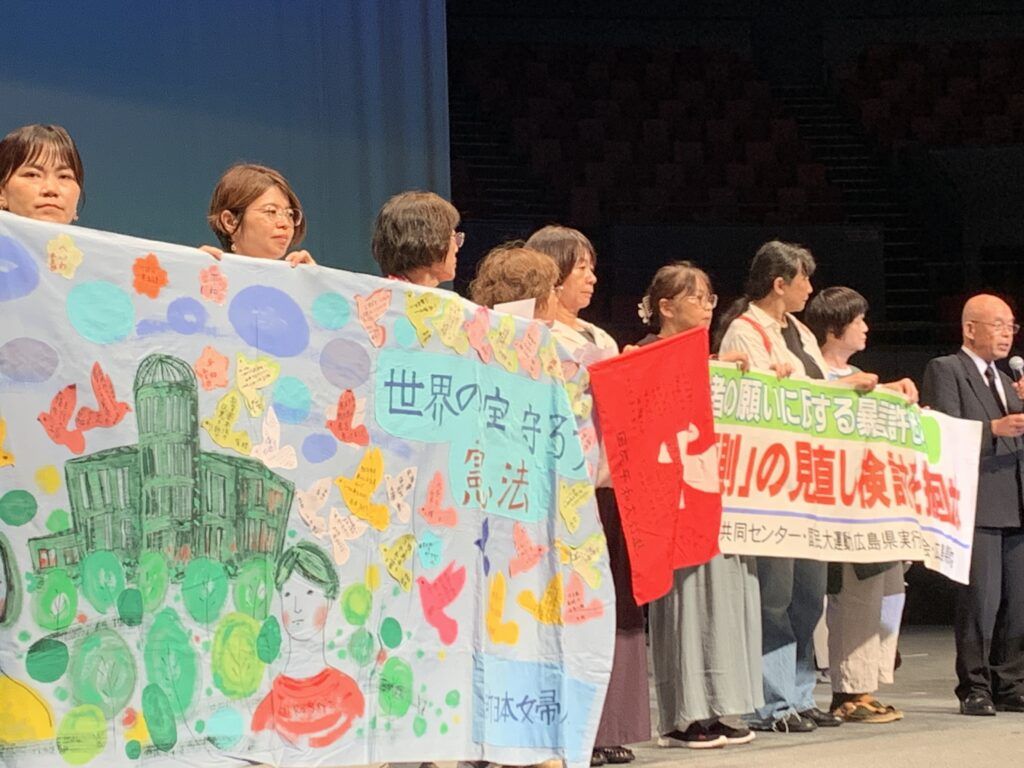
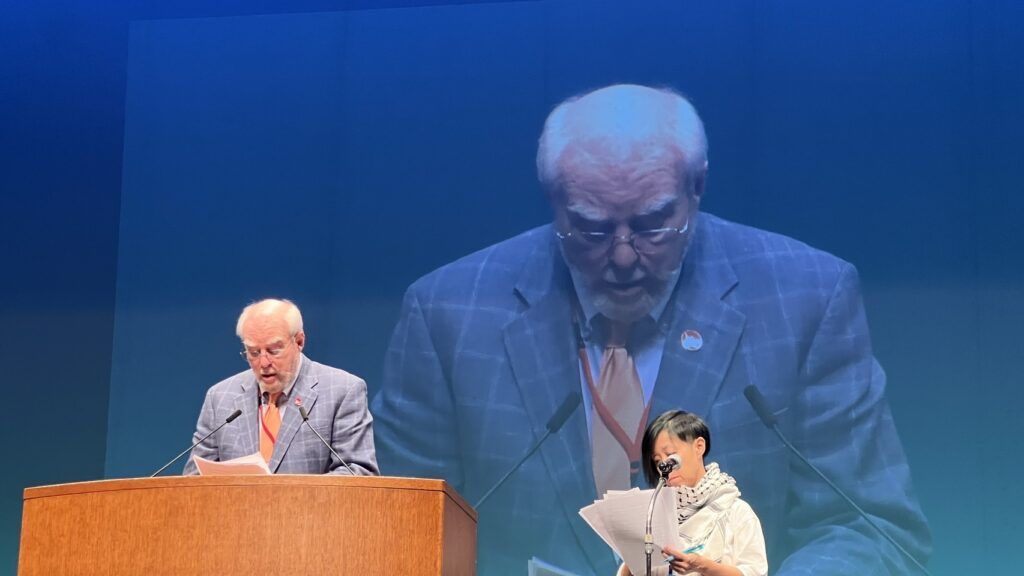
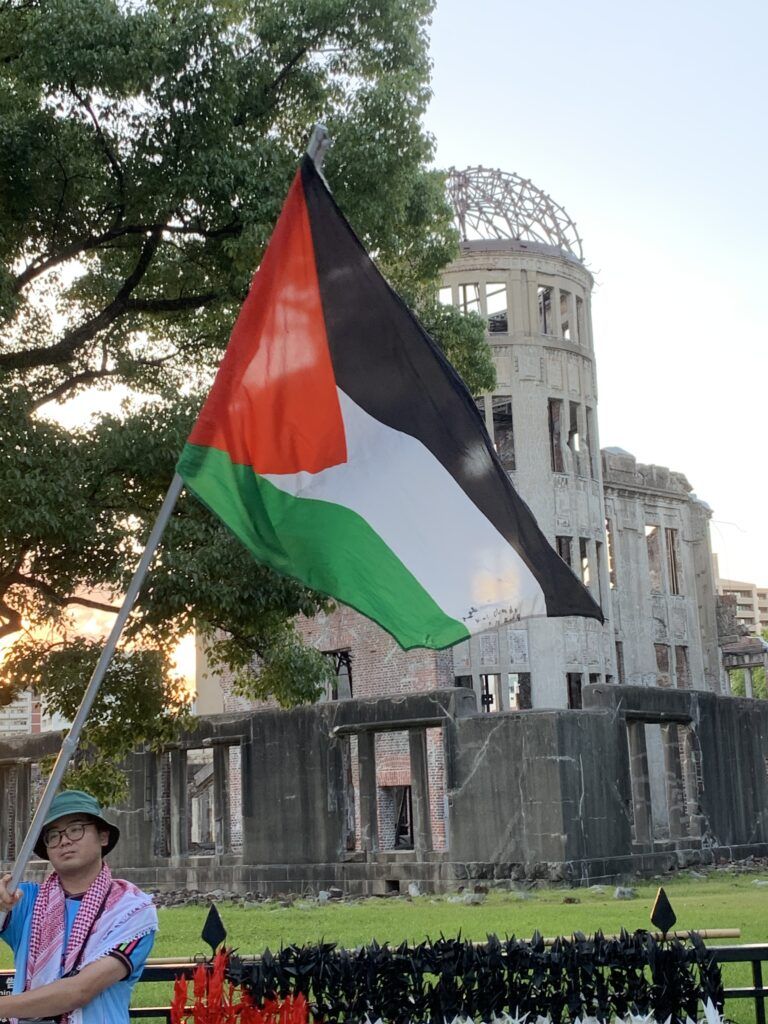
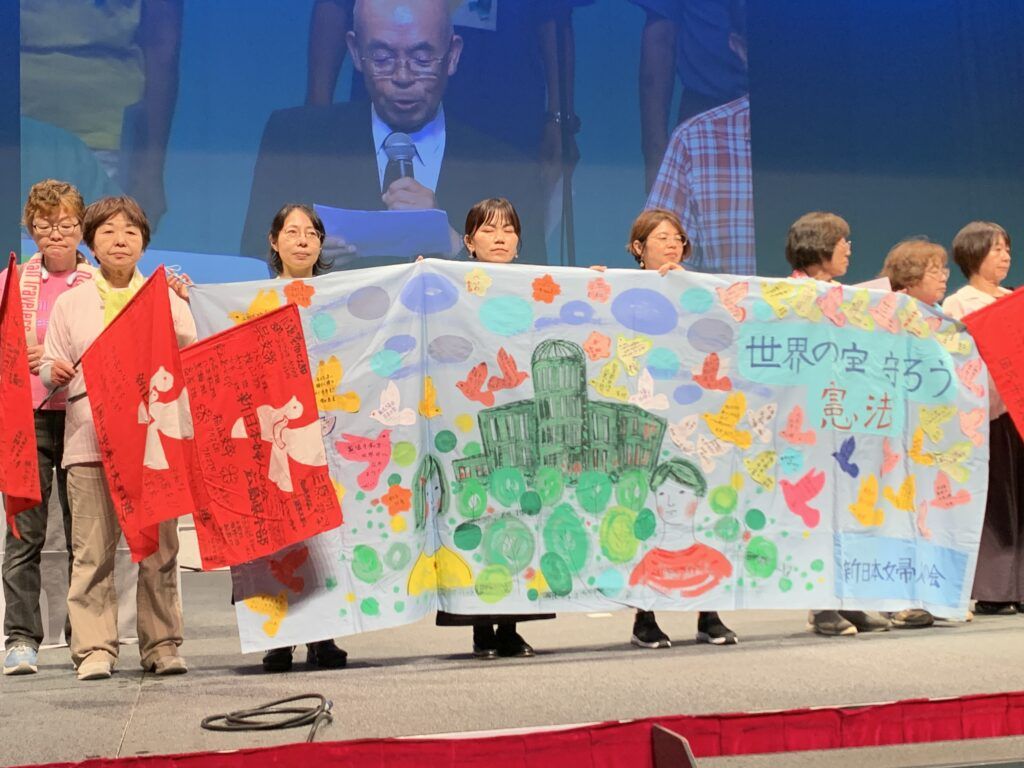
2026 World Conference against A and H Bombs, Hiroshima, Japan
Photo Credits: Joseph Gerson and all the rightful owners